
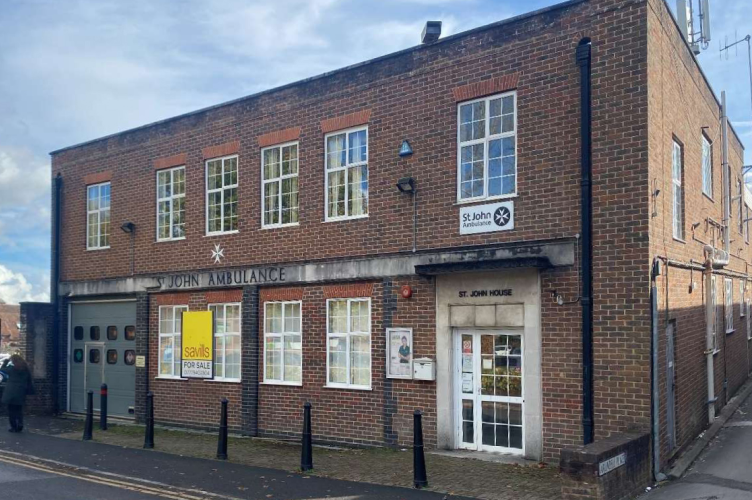
When a borrower approached us with plans to convert a vacant commercial building into residential units, they had a vision that extended beyond a simple conversion. The first stage is converting the former ambulance station to 6 flats under permitted development. Once this is complete, the second stage is transforming the 6 flats into 6 HMOs through planning-led expansion and the addition of another storey containing 2 more HMOs. The outcome after both stages, 8 high-quality HMOs.
Most lenders would have suggested two separate facilities or insisted on pre-planning approval before committing. We saw an opportunity to put both schemes into a single facility with a loan amount of £1.7m at 65% LTV and LTGDV over 20 months.
The property sits in Farnham, a market town with strong demand for quality rental accommodation. A shortage of newly refurbished HMOs and single-unit apartments has been created due to a nearby university campus. So this wasn't just a conversion, it was addressing a local housing need.
Key Challenges and Solutions
Structuring a dual-phase scheme in one facility
Rather than providing a pre-planning bridge or two separate loans, we wrapped both schemes into a single facility. This allowed for two construction tranches: one available immediately to convert the commercial property to 6 flats under permitted development, and a second tranche retained for release upon approval of planning for the additional storey and HMO consent. This structure eliminated refinancing costs and gave the borrower certainty from day one that they would be able to complete the project in full.
Planning risk on the second phase
Prior approval and the full planning application had not yet been submitted at completion. We mitigated this by leveraging the vacant possession commercial value at 65% LTV, ensuring we weren't overexposed should prior approval not be granted. The PD works could proceed while full planning was being determined, eliminating delays to the development timeline.
Build cost contingency
The budget included only a modest contingency allowance. The borrower's significant experience as both developer and contractor, combined with a strong net asset position, provided confidence in cost management. At 65% LTGDV, there was sufficient headroom to absorb any cost or interest overruns.
The Outcome
The £1.7m facility provides the borrower with a clear pathway from a vacant commercial building to 8 high-quality HMOs. The permitted development scheme delivers a GDV of £2.1m, with the full planning scheme reaching £2.6m. The borrower's profit margin of 19% demonstrates a commercially viable project with upside potential.
This deal was delivered by Dan Margolis and Tom Williams.


